





Pond Spillways & Waterfall Spillways
from $315.00
Pond Spillways and Waterwalls Australia
A spillway is the visible top of a waterfall — the lip where water cascades over into the pond. A waterwall is a wider version, typically a flat sheet of water flowing down a vertical surface. Both are mounted into the structure of a water feature; the pump pushes water up and through them.
Three spillway types we stock
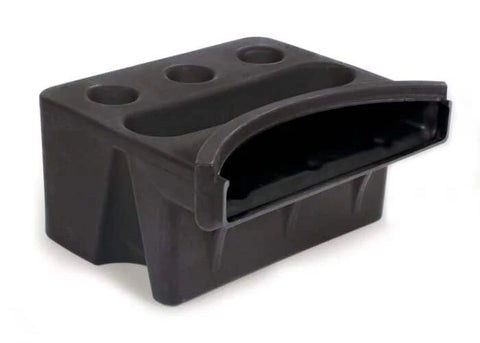
- Spillway boxes: a hollow shell that sits behind rockwork. Water enters through a pipe at the back, fills the chamber, then flows over a wide weir lip. Most common for natural-look pondside waterfalls. Sizes 30cm to 90cm wide.
- Stainless steel sheet spillways: for modern architectural water walls. Brushed or mirror finish. The sheet of water effect is what gives waterwalls their signature look.
- Bowl spillways: decorative bowl that overflows continuously. See spillway bowls for ceramic and concrete options.
How to plumb a spillway
Most spillway boxes accept a 25mm or 38mm hose connection at the back. Connect to your pump output via flexible pond hose. The pump flow rate determines the depth and visual character of the water sheet:
- Thin film effect: 1,500–3,000 L/h per 30cm of spillway width
- Full sheet flow: 4,000–6,000 L/h per 30cm width
- Heavy waterfall: 8,000+ L/h per 30cm
Sealing the spillway into rockwork
The biggest install error is letting water leak around the spillway instead of over it. Seal the back of the spillway box to the surrounding rocks with black waterfall foam — fill every void. Test by running the pump before building up the rockwork, so you can fix leaks while everything is still accessible.
Pump sizing for waterwalls
Tall, wide waterwalls need serious pump head. A 2m-tall waterwall with a 60cm sheet width needs roughly 6,000 L/h with at least 3m of head capacity. Pumps from our pond pump range with high-head ratings cover this.
For a complete water feature kit including spillway, pump, basin and plumbing, see our pre-bundled options.